Why Modern Enterprises Are Moving to Kubernetes
Logic Matrix Expert Team Cloud Infrastructure Kubernetes DevOps
6 min read
Table of contents
The shift from monoliths to microservices
How Kubernetes solves the complexity crisis
The core pillars of Kubernetes reliability
Understanding the Kubernetes cluster architecture
Why adoption is accelerating in the multi-cloud era
Editor’s note: If your organization is struggling to manage the growing complexity of containerized applications or facing frequent downtime during updates, you may be outgrowing manual management. Continue reading to understand why Kubernetes has become the industry standard for future-ready businesses.
Kubernetes began as an ambitious internal project within Google and has since evolved into the leading open-source platform for automating the deployment, scaling, and management of containerized applications. As applications grow deeper into an enterprise's IT infrastructure, Kubernetes ensures they run reliably by handling critical tasks like load balancing and scaling.
The shift from monoliths to microservices
Historically, enterprises operated on monolithic architectures, but the transition to microservices significantly increased operational complexity. In the past, managing these services manually was feasible, but as the number of components grew, manual management became unrealistic.
How Kubernetes solves the complexity crisis
Kubernetes transforms what were once complex, chaotic operations into predictable and automated systems. It addresses the challenges of modern infrastructure by providing:
Automated rollouts and rollbacks: Ensuring new features are deployed without breaking the system.
Consistent deployment workflows: Creating a unified path from development to production.
Service discovery: Allowing different parts of an application to find and communicate with each other automatically.
Self-healing workloads: Automatically addressing issues before they impact the end-user.

The core pillars of Kubernetes reliability
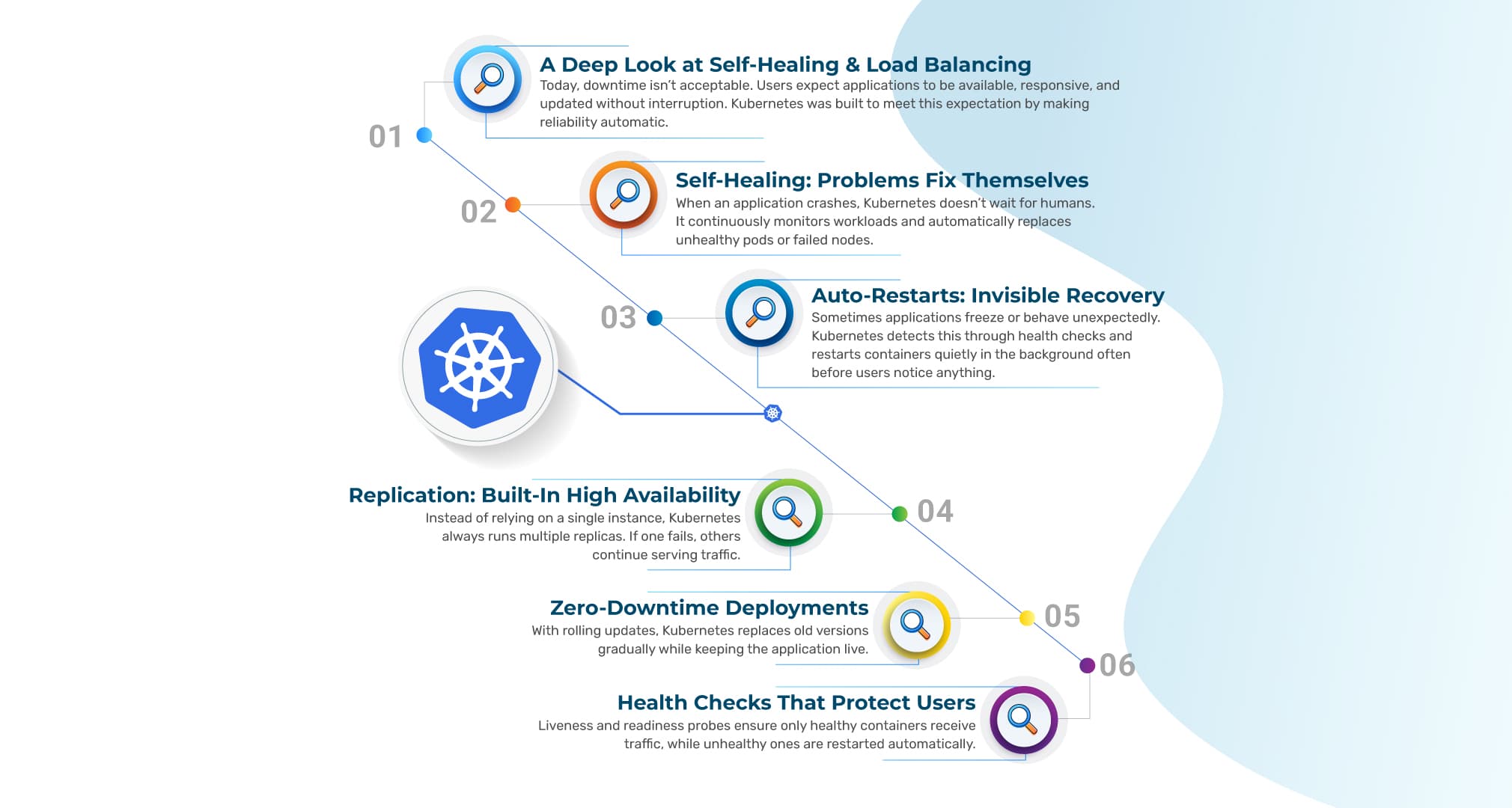
Reliability is not an add-on; it is built into the core of the platform. Kubernetes delivers high availability through several automated mechanisms:
Automated Restarts: It identifies and restarts failed containers automatically.
Intelligent Traffic Balancing: It directs traffic based on real-time demand to prevent overloading specific components.
Zero-Downtime Updates: It enables rolling updates that allow for system improvements without human intervention or service interruptions.
Understanding the Kubernetes cluster architecture
The power of Kubernetes lies in its Cluster architecture, which is divided into a Control Plane and multiple Nodes. The Control Plane acts as the brain, featuring components like the kube-apiserver, scheduler, and etcd to manage the state of the system. The Nodes are the workers that run the actual "Pods" (the smallest deployable units), managed by the kubelet and kube-proxy.
Why adoption is accelerating in the multi-cloud era
As enterprises expanded into multi-cloud and hybrid environments, they required a single platform that could automate everything across disparate environments. Kubernetes became the choice because it:
Simplifies microservices management.
Enables self-healing scale that reacts to real-world traffic.
Supports any cloud provider, preventing vendor lock-in.
Pro Tip: While Kubernetes handles orchestration, it is often used in conjunction with third-party tools like Prometheus for deep monitoring of these containerized environments.
Implementing Kubernetes for your business
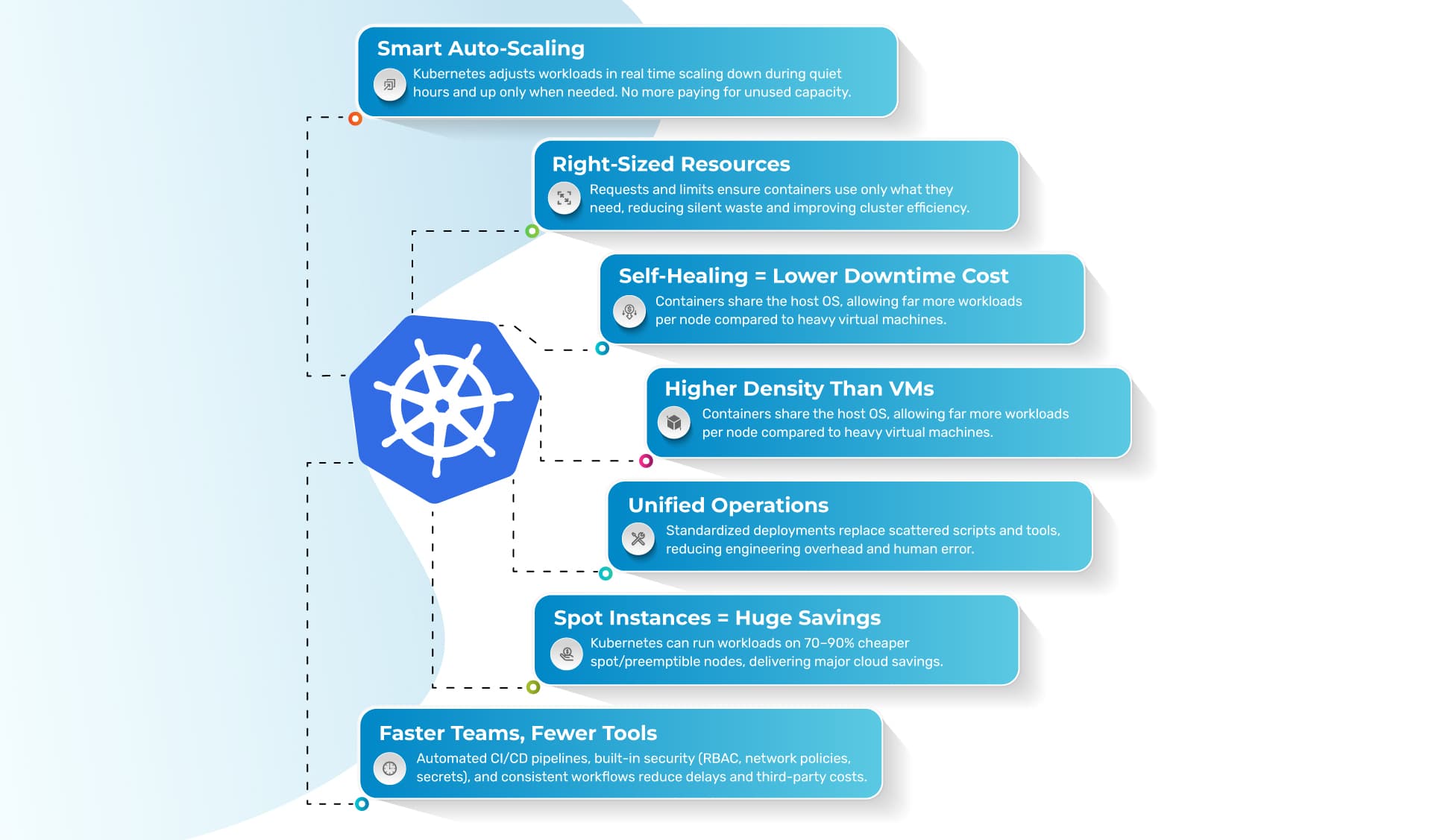
Transitioning to Kubernetes is more than just an infrastructure change; it is how future-ready businesses run. However, setting up a cluster that is both secure and efficient requires deep technical expertise. By leveraging professional managed services, you can minimize downtimes and optimize resource consumption.
READY TO EVOLVE YOUR INFRASTRUCTURE? [Let’s Talk]
I have prepared this blog post to follow the requested style and content. You can now upload this text to your website along with the image in the architecture section. Would you like me to create a tailored report summarizing the technical requirements for a Kubernetes migration based on these sources?