Mastering Kubernetes Advanced Optimization and Governance
Table of contents
The transition from stability to efficiency
Implementing rule-based monitoring governance
The "Golden Signals" of cluster optimization
Strengthening the security pillar
Selecting tools for multi-cloud environments
Realizing business ROI through performance management
Editor’s note: While Day 1 is about architecture and Day 2 is about stability, Day 3 is where enterprises transform their Kubernetes environment into a lean, secure, and highly efficient machine. If you are struggling with rising cloud costs or complex security requirements, this deep dive is for you.
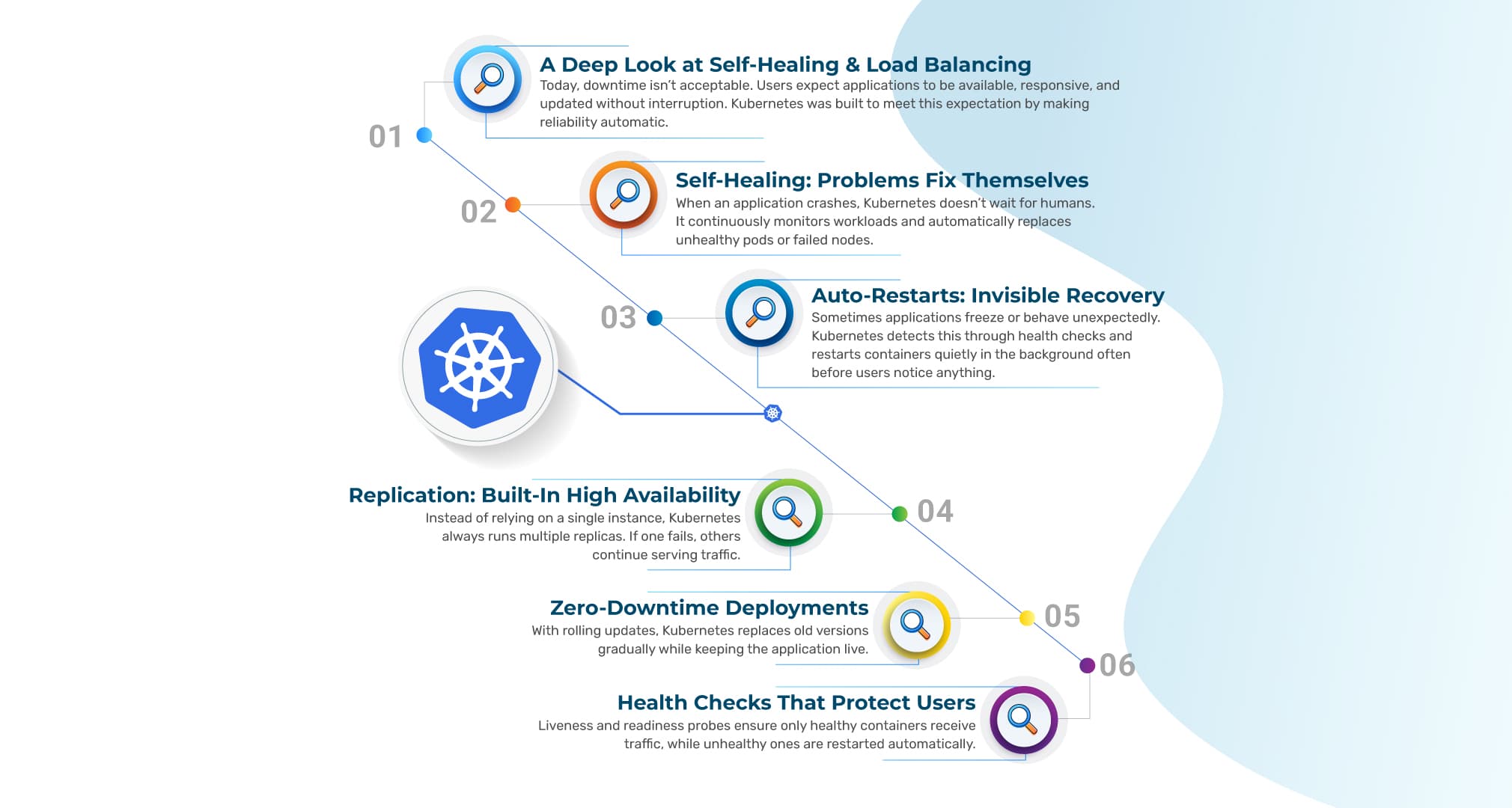
As Kubernetes clusters grow deeper into your business's IT infrastructure, the focus must shift from simply staying online to running as efficiently as possible. Kubernetes already provides the foundation by handling tasks like load balancing, scaling up during high traffic, and rolling out updates without downtime. Day 3 operations take this further by integrating professional monitoring and governance to minimize runtime errors and optimize resource consumption.

Implementing rule-based monitoring governance
A common pitfall in advanced cluster management is an overly complex system that is hard to maintain. To avoid this, your "Day 3" strategy should adopt a rule-based architecture where every alert is purposeful. Our DevOps experts recommend following these guidelines:
Urgency: Monitored conditions must be urgent and affect the end-user.
Actionability: Every alert should be assigned to personnel entitled to resolve that specific issue.
Automation: Responses to alerts should be automated to minimize human intervention and speed up resolution.
Clarity: Rules should detect otherwise unnoticed or unrecognizable conditions.
The "Golden Signals" of cluster optimization
True optimization relies on tracking the "golden signals" of infrastructure health rather than collecting redundant data. By focusing on these four metrics, you can ensure your platform reacts to real-world demand in a self-healing scale:
Latency: Measuring the exact time it takes to respond to user requests to identify bottlenecks.
Traffic: Monitoring the number of requests over time to manage scale effectively.
Errors: Tracking the rate of failed requests to maintain high reliability.
Saturation: A critical "Day 3" metric that measures how efficiently your nodes and pods are consuming allocated resources.
Strengthening the security pillar
Security is a key aspect of advanced monitoring. As you move into Day 3, your organization must maintain strict control over access and permissions for your cloud accounts and specific resources. Addressing these security issues through proactive monitoring allows you to avoid occasional downtimes and protect sensitive data across industry-specific architectures.
Selecting tools for multi-cloud environments
Choosing the right toolset is essential for a mature "Day 3" strategy, especially in multi-cloud or hybrid environments.
Prometheus: Ideal for monitoring containerized environments and managing Kubernetes/EKS clusters with customizable dashboards.
Zabbix: Recommended for distributed monitoring across multiple cloud providers, offering a single overview dashboard to consolidate data.
Amazon CloudWatch: A powerful choice for pure AWS environments, though it requires high technical qualification to configure properly for advanced alerts.
Realizing business ROI through performance management
Advanced monitoring is not just a technical requirement; it is a business driver. By implementing this high-level approach, enterprises have seen significant gains:
65% decrease in system downtimes.
70% decrease in response time to faults.
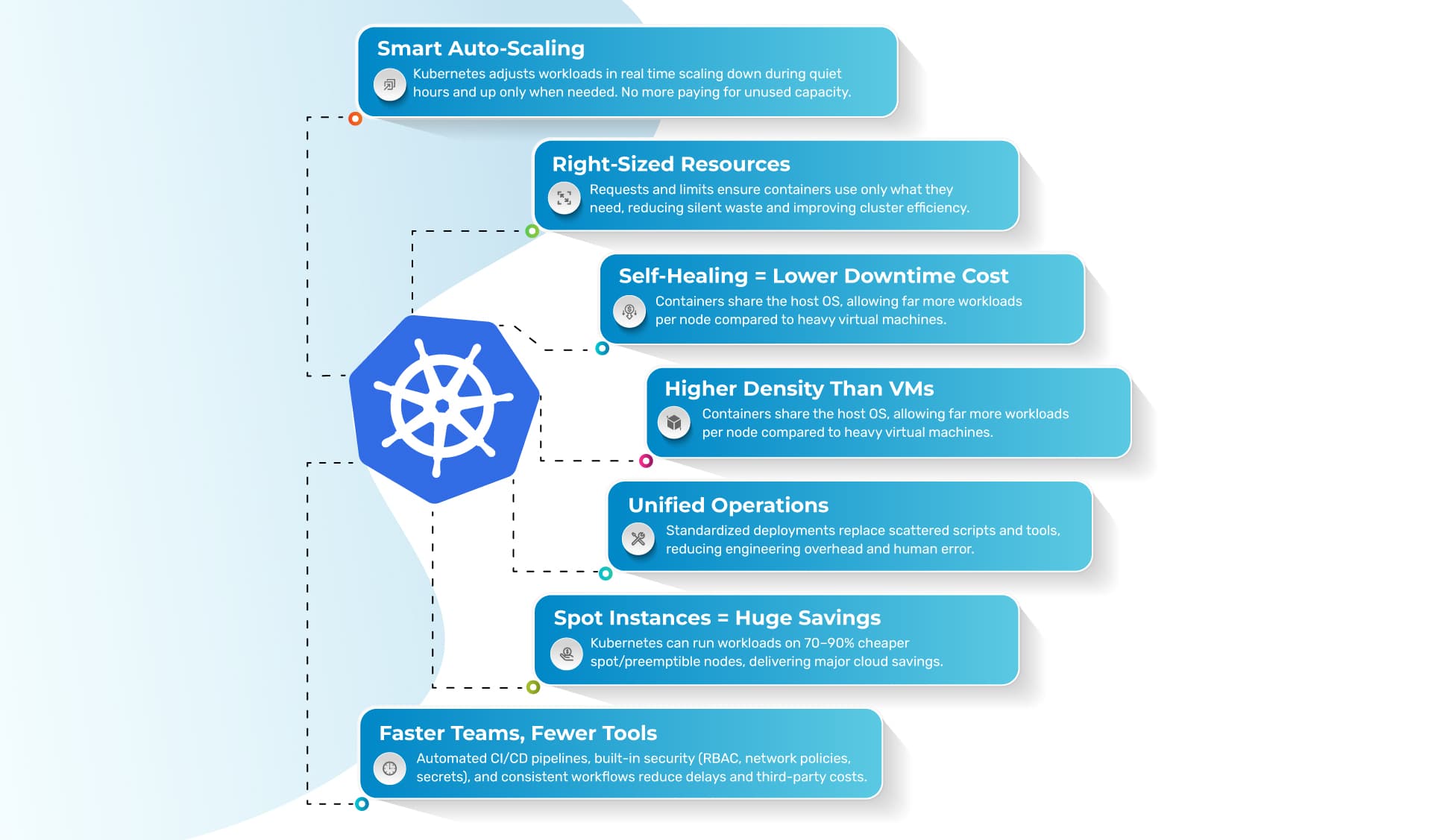
Optimized resource allocation, leading to lower infrastructure costs and improved application performance.
READY TO OPTIMIZE YOUR INFRASTRUCTURE?
To help you present these "Day 3" concepts to your stakeholders, would you like me to create an infographic or a slide deck that highlights the ROI of Kubernetes optimization and security?