Optimizing Kubernetes Day 2 Operations for Peak Efficiency
Logic Matrix Expert Team Cloud Infrastructure Kubernetes Infrastructure Management
Table of contents
Our approach to Kubernetes lifecycle management
Critical metrics for cluster health
Recommended tools for Day 2 observability
Lifting the burden of cluster maintenance
Editor’s note: If you have successfully deployed your clusters but are now struggling with the complexity of maintaining performance and stability, your "Day 2" strategy may need refinement. Continue reading to see how we streamline ongoing Kubernetes management.
While "Day 1" focuses on the initial deployment and architecture of your Kubernetes cluster, "Day 2" is where the real work of ensuring long-term reliability begins. As containerized applications grow deeper into your business infrastructure, maintaining their health requires a transition from manual management to automated, metric-driven operations.

Our approach to Kubernetes management
Efficient operations rely on a predictable and reliable monitoring system. Our approach centers on tracking real incidents that affect the end-user, ensuring that alerts are urgent and actionable rather than redundant. By automating responses to these alerts, we minimize human intervention and keep your cloud applications online.
Critical metrics for cluster health
To avoid an overly complex system, we recommend focusing on the "golden signals" of infrastructure health:
Latency: The time it takes for your pods to respond to user requests.
Traffic: The volume of demand placed on your cluster.
Errors: The rate of request failures within your containers.
Saturation: Measuring how efficiently your nodes are consuming resources.
Recommended tools for observability
Selecting the right toolset depends on whether your environment is strictly cloud-based or hybrid.
Prometheus: The industry standard for monitoring containerized environments and managing Kubernetes clusters.
Amazon CloudWatch: Best for environments that stay entirely within the AWS ecosystem, offering deep integration but requiring high technical expertise to configure.
Zabbix: A powerful option for multi-cloud environments that provides a single overview dashboard from multiple data sources.
Lifting the burden of cluster maintenance
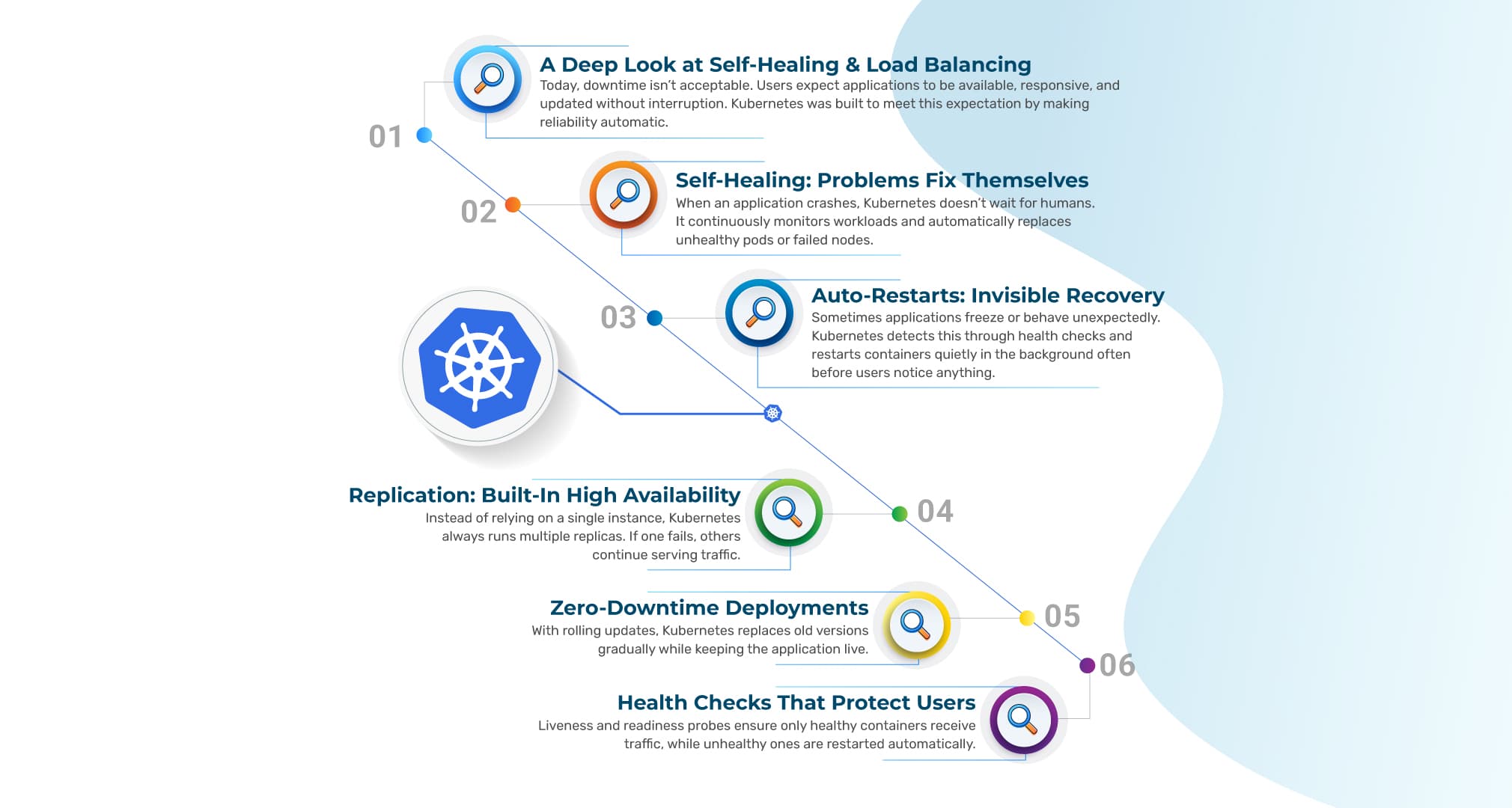
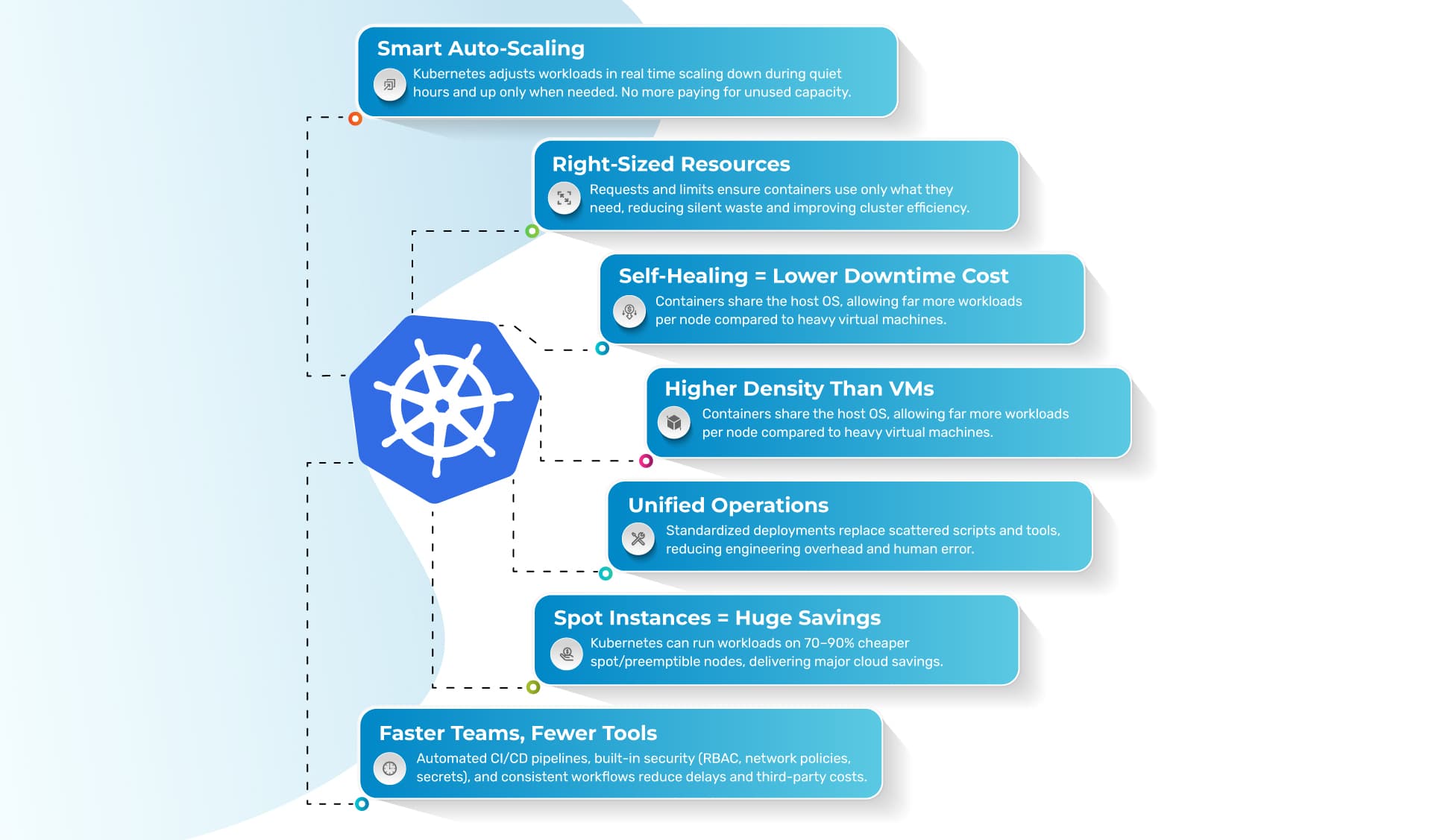
Managing the lifecycle of a Kubernetes environment, including automated rollouts, self-healing workloads, and security patches, requires deep technical expertise. By implementing a professional monitoring and management strategy, businesses can decrease downtimes by up to 65% and significantly optimize resource consumption.